

| Shalini. V*1, Saran Raj. E2, Nivedhitha. S3, Adhavan. A4, Jenifer Ishwarya. S5, Vijayalakshmi. B6 |
| Authors: 2,6Assistant Professor, Mohamed Sathak A J College of Physiotherapy, Nungambakkam, Chennai, India 3Assistant Professor, J. R Medical College and Hospital, Kiledayalam, Tindivanam, Villupuram DT, India 4Clinical Therapist, Sugam Hospital, Sunnambu Colony, Chrompet, Chennai, TN, India 5Clinical Therapist, Arunai Medical College and Hospital, Thenmathur, Tiruvannamalai Chennai, India Corresponding Author: 1*Assistant Professor, Mohamed Sathak Aj College of Physiotherapy, Nungambakkam, Chennai, India Mail id: shalinivenugopal04@gmail.com |
Abstract
| Background of the Study: Adhesive capsulitis is one of the most common disabling orthopedic disorders. Both Scapular PNF and Scapular Mobilization along with Maitland’s Glenohumeral Mobilization is effective in reducing Pain and increasing Range of motion, but limited evidence compares their relative effectiveness in reducing pain and increasing range of motion in patients with Adhesive capsulitis. Aim of this study is to compare the effects of Scapular Proprioceptive Neuromuscular facilitation and Maitland glenohumeral mobilization versus Scapular Mobilization and Maitland Glenohumeral Mobilization for women with Adhesive capsulitis and determine which method yields more significant improvement. Method of the Study: A total of 44 subjects were selected according to inclusion and exclusion criteria and divided into two groups, Group A, 22 Subjects received Scapular PNF and Maitland Glenohumeral Mobilization and Group B, 22 subjects received scapular mobilization and Maitland glenohumeral mobilization for 4 weeks (16 sessions). Pain and range of motion was assessed using Visual Analog Scale (VAS), goniometer and Lateral Scapular Slide Test (LSST). Result: Group A has reduced score in had lower mean score (2.24 ± 0.15) compared to Group B (4.23 ± 0.12) Group A had lower mean score (1.50 ± 0.00) compared to Group B (2.40 ± 000), suggesting a better outcome, suggesting a better reduction outcome in Group A. Conclusion: The study concludes that scapular Proprioceptive Neuromuscular Facilitation (PNF) and Maitland Glenohumeral Mobilization is more effective than Scapular Mobilization and Maitland Glenohumeral Mobilization in reducing pain and improving the range of motion. Keywords: Adhesive capsulitis, Scapular Mobilization, Maitland’s Glenohumeral Mobilization, Range of Motion, Visual Analog Scale, Goniometer |
| Received on 27th July 2026; Revised on 24th August 2026; Accepted on 26th August 2026 DOI:10.36678/IJMAES.2026.V12I03.04 |
INTRODUCTION
Shoulder pain is a very frequent muscular skeletal disorder. Among shoulder pain Adhesive capsulitis is one of the most common and disabling Orthopaedic disorder 1,2. Earlier in 1934 Codman introduced the term periarthritis to shoulder. Later in 1945Neviaser revised the name as adjective capsulitis based on radiographic appearance with orthography3,4.
Adhesive capsulitis is an idiopathic musculoskeletal condition characterized by fibrosis, decreased volume of glenoid capsule and progressive pain with loss of passive and active Range of Motion 5,6,7.
It usually occurs between the age of 40 and 60 years and the incidence is more in female than male8.
This pain usually aggravates by shoulder moment and relieved by rest, Pain increases during night time and disturbs the sleep. Activities of daily living get affected usually reaching behind the back, across the body and overhead activities. Cyriax proposed that external rotation would be more restricted than abduction which would be more restricted than internal rotation of shoulder joint9.
Adhesive capsulitis classically progresses through stages they are Freezing stage (2 to 9 months), Frozen stage (4 to 12 months), Thawing stage (12 to 42 months). In the study patient falling under freezing stage are studied as they have more intense and persistent pain even at rest and range of motion restriction10.
The mobility of shoulder Complex involves combined moment of different joints especially Scapulothoracic and glenohumeral joint. The decreased scapulothoracic joint motion affects the synergistic rhythm between the scapulothoracic and glenohumeral joint. Without the contribution of scapulothoracic joint motion passive and active ROM of shoulder flexion and abduction are diminished by at least one third11.
The paraffin wax bath is used to improve circulation and promote relaxation, wax bath along with passive stretch and exercise increases mobility, elasticity and decreases stiffness12.
Maitland Mobilization of grade 1 and 2 have inhibitory effect that stimulates the mechanoreceptors that block nociceptive pathway at spinal cord or brainstem level and are not stretch motion which help the synovial fluid to improve nutrition to cartilage grade 3 and grade 4 are primary used as stretching manuvers13.
Proprioceptive neuromuscular facilitation stretch is a technique is used to enhance both active and passive ROM, reduce pain, and improve functional pattern and handling technique to facilitate both coordination and stability in muscle group14.
Proprioceptive Neuromuscular Facilitation technique involves reciprocal activation of the Agonist and Antagonist the desire motion, Therefore Provide the greatest potential for muscle functioning 15,16.
In this study the scapular Proprioceptive Neuromuscular Facilitation and Scapular Mobilization is applied and compared to find out the effectiveness in the patient with adhesive capsulitis Scapular Proprioceptive Neuromuscular Facilitation was applied in two diagonals 1. Anterior elevation and posterior depression, 2. Posterior elevation and anterior depression
The rhythmic initiation facilitation technique is applied in all patterns. Scapular mobilization involves manual application of sustained Mobilization by therapist to scapulothoracic joint and considered to provide positive effects on range of motion of shoulder joint1,5-17.
The main objective of this study is to compare the effect of scapular proprioceptive neuromuscular facilitation and Maitland Glenohumeral mobilization versus scapular mobilization and Maitland Glenohumeral Mobilization along with paraffin wax administered for both the groups with Adhesive capsulitis1.
Objectives of the Study:
1.To assess the effect of Scapular Proprioceptive Neuromuscular Mobilization and Maitland Glenohumeral Mobilization for women with Adhesive Capsulitis.
2.To assess the effect of Scapular Mobilization and Maitland Glenohumeral Mobilization for women with Adhesive Capsulitis
3.To compare the effect of Scapular Proprioceptive Neuromuscular Facilitation and Maitland Glenohumeral Mobilization versus Scapular Mobilization and Maitland Glenohumeral Mobilization for women with Adhesive Capsulitis.
MATERIALS AND METHOD
Study setting- Adhiparasakthi Hospital, Melmaruvathur, Chengalpattu, Tamil Nadu. Fix and Fits Physiotherapy clinic, Chrompet, Chengalpattu, Tamil Nadu. Study duration was 6 Months (April 2025-September 2025), Study Design was Double blind study.
Study participants were Female patients having Adhesive Capsulitis with pain and Range of motion restriction. Sample size was calculated using previous research article (Joshi, Yashodhara S., et al. “A comparative study on the effect of scapular proprioceptive neuromuscular facilitation and Maitland glenohumeral mobilization versus scapular mobilization and Maitland glenohumeral mobilization in adhesive capsulitis. International Journal of Health Sciences and Research Nov 10.11 (2020): 135-143. is calculated using previous research article’s) 1, standard deviation and variance by the software G*Power 3.1.9.4. Sample size was 44 subjects Group A- 22 subjects Group B -22 subjects.
Sampling technique: Convenient Sampling Method
Inclusion Criteria:
1.Confirmatory diagnosis with Adhesive capsulitis, both primary and secondary origin.
2.Women with age group between 40-65 years old.
3.Freezing Stage of Adhesive capsulitis.
4.Capsular restriction in movement.
5.Visual analog scale – 5-8.
6.Range of motion –Shoulder range of motion restriction above 90 degrees.
Exclusion Criteria:
1.Pathology of shoulder other than adhesive capsulitis.
2.History of shoulder surgery Manipulation under anaesthesia, local corticosteroid injection administration within last 3 months.
3.Patients with Cancer.
4)Presence of medical condition such as cardiac disease, infection, coagulation disorders.
Variables:
Dependent Variable: Pain and Range of Motion
Independent Variable: Scapular Proprioceptive Neuromuscular Facilitation (PNF), Scapular Mobilization, Maitland Glenohumeral Mobilization Outcome Measures were Visual Analog Scale, Goniometer and Lateral Scapular Slide Test
Data Collection Performa:
Visual Analog Scale (VAS) – Measured before and after the intervention to determine pain levels 0-10
Goniometer (Active Range of Motion)– Measured before and after intervention.
Lateral Scapular Slide Test (LSST) -Assessed before and after intervention to determine scapular dyskinesia and its asymmetry under varying load Patient Position: The humerus is placed in maximal medial rotation and 90 degrees abduction.
Material Required: Couch, Foot stool, Pillow, Goniometer, Inch tape.
Treatment Technique:
GROUP A- Scapular PNF and Maitland Glenohumeral Mobilization
GROUP B- Scapular Mobilization and Maitland Glenohumeral Mobilization
Treatment Programme:
After initial evaluation, the purpose of the study was explained and an informed consent was obtained from the patient. A total of 44 subjects with Adhesive capsulitis were selected based on the selection criteria. They were randomly divided into two groups, Group A (n=22) and Group B (n=22). Group A received Scapular PNF and Maitland Glenohumeral Mobilization. Group B received Scapular Mobilization and Maitland Glenohumeral Mobilization Both the groups were treated for 4 sessions per week for 4 weeks. These groups were evaluated using Visual Analogue Scale, Goniometer and Lateral Scapular Slide test for pain and range of motion respectively. Pre and Post intervention evaluation were compared and statistically analysed.
Application Of Technique
Group A and Group B participants were treated with Wax therapy (40-45 degree Celsius) around the shoulder for 8-10 minutes before commencing of treatment.
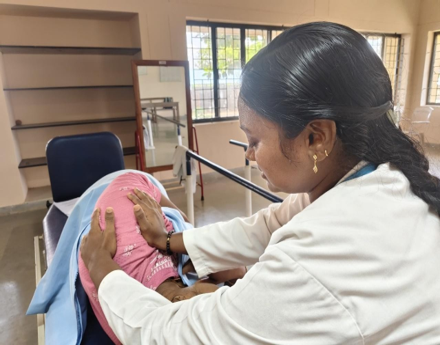
Picture 1: D1 Pattern-Anterior Elevation and Posterior Depression
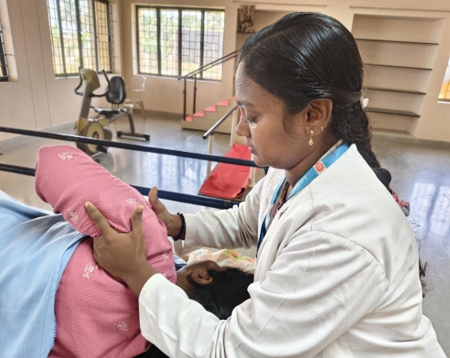
Picture 2: D2 pattern-Posterior Elevation and Anterior Depression
GROUP A: Proprioceptive Neuromuscular Facilitation (PNF)
- Scapular PNF in two diagonals
- D1 Pattern-Anterior Elevation and Posterior Depression
- D2 pattern-Posterior Elevation and Anterior Depression
- Rhythmic initiation facilitation technique was applied in all patterns
- 20 repetitions for each diagonal pattern
- Resting interval was given 20 seconds between each pattern
GROUP B: Scapular Mobilization
Gliding Rotations and Distractions to scapula on Superior direction and Inferior direction
- 10 sets of 10 repetitions were applied
- Rest interval of 30 seconds given between sets.
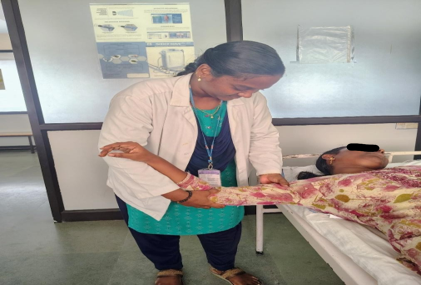
Picture 3: Scapular Mobilization
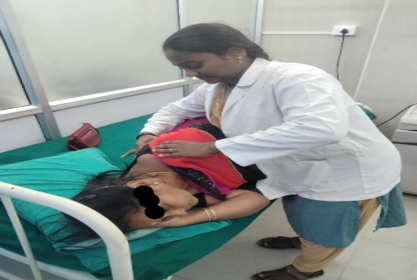
Picture 4: Inferior Glenohumeral Glide
Maitland Glenohumeral Mobilization (both group A and B)
- Followed by Scapular PNF and Scapular Mobilization
- Maitland Glenohumeral inferior Glide
- Anteroposterior Glide, Posteroanterior Glide
- Passive oscillatory movements were performed at the rate of 2-3 glides per second for 30 seconds of each glide, 5 sets were given for each glide
- 4 times a week for 4 weeks (16 sessions)
- Duration = 45-60 minutes.
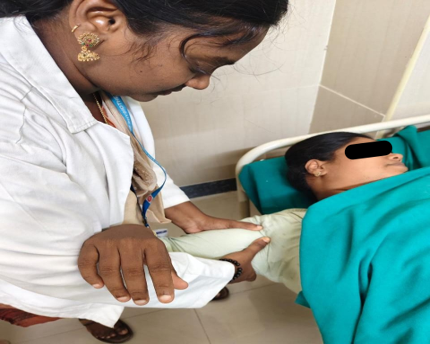
Picture 5: Maitland Glenohumeral Anteroposterior Glide
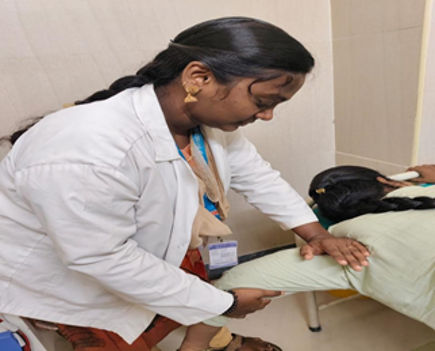
Picture 6: Maitland Glenohumeral Posteroanterior Glide
Analysis
The collected data were analyzed using SPSS version 20.0. Descriptive statistics (mean and standard deviation) were used to describe Pre- and Post-test scores for both Group A and Group B. Paired sample t-tests were used to compare within group differences, while independent t-tests were used to compare between groups. A p-value less than 0.05 was considered statistically significant.
RESULT
VISUAL ANALOGUE SCALE (VAS):
| GROUP A | GROUP B | ||
| Mean | Pre-test 7.127 | Mean | Pre-test 7.100 |
| Post-test 2.240 | Post-test 4.231 | ||
| S. D | Pre-test 0.142 | S. D | Pre-test 0.123 |
| Post-test 0.156 | Post-test 0.152 | ||
The paired ‘t’ test value for the Group A Post test mean value is 2.240±0.156 and Group B mean value is 4.231±0.152 the calculated ‘t’ value is 42.7 more than table value 0.001 level of significance.
Goniometer:
Flexion
| GROUP A | GROUP B | ||
| Mean | Pre-test 95.863 | Mean | Pre-test 94.863 |
| Post-test 148.590 | Post-test 127.727 | ||
| S. D | Pre-test 0.888 | S. D | Pre-test 0.774 |
| Post-test 1.007 | Post-test 1.162 | ||
The paired ‘t’ test value for the Group A Post test mean value is 148.590±1.007 and Group B mean value is 127.727±1.162 the calculated ‘t’ value is 63.62 more than table value 0.001 level of significance.
Extension
| GROUP A | GROUP B | ||
| Mean | Pre-test 34.545 | Mean | Pre-test 34.227 |
| Post-test 49.863 | Post-test 41.772 | ||
| S. D | Pre-test 0.911 | S. D | Pre-test 0.751 |
| Post-test 0.888 | Post-test 1.231 | ||
The paired ‘t’ test value for the group A Post test mean value is 49.863±0.888 and group B mean value is 41.772±1.231 the calculated ‘t’ value is 24.98 more than table value 0.001 level of significance.
Abduction
| GROUP A | GROUP B | ||
| Mean | Pre-test 92.500 | Mean | Pre-test 92.000 |
| Post-test 144.954 | Post-test 124.727 | ||
| S. D | Pre-test 1.101 | S. D | Pre-test 1.023 |
| Post-test 1.066 | Post-test 1.202 | ||
The paired ‘t’ test value for the Group A Post test mean value is 144.772±1.066 and Group B mean value is 124.727±1.202 the calculated ‘t’ value is 58.51 more than table value 0.001 level of significance.
Adduction
| GROUP A | GROUP B | ||
| Mean | Pre-test 29.681 | Mean | Pre-test 29.681 |
| Post-test 44.954 | Post-test 36.590 | ||
| S. D | Pre-test 0.838 | S. D | Pre-test 0.716 |
| Post-test 1.214 | Post-test 1.007 | ||
The paired ‘t’ test value for the group A post test mean value is 44.954±1.214 and group B mean value is 36.590±1.007 the calculated ‘t’ value is 24.86 more than table value 0.001 level of significance.
Internal Rotation
| GROUP A | GROUP B | ||
| Mean | Pre-test 60.090 | Mean | Pre-test 59.727 |
| Post-test 80.363 | Post-test 69.409 | ||
| S. D | Pre-test 0.750 | S. D | Pre-test 0.767 |
| Post-test 1.176 | Post-test 1.140 | ||
The paired ‘t’ test value for the Group A Post test mean value is 80.363±1.176 and Group B mean value is 69.409±1.14056 the calculated ‘t’ value is 31.35 more than table value 0.001 level of significance.
External Rotation
| GROUP A | GROUP B | ||
| Mean | Pre-test 91.318 | Mean | Pre-test 90.909 |
| Post-test 138.681 | Post-test 122.590 | ||
| S. D | Pre-test 0.994 | S. D | Pre-test 1.019 |
| Post-test 1.170 | Post-test 0.959 | ||
The paired ‘t’ test value for the Group A Post test mean value is 138.681±1.170 and Group B mean value is 122.590±0.959 the calculated ‘t’ value is 49.87 more than table value 0.001 level of significance.
LATERAL SCAPULAR SLIDE TEST(LSST)
| GROUP A | GROUP B | ||
| Mean | Pre-test 3.600 | Mean | Pre-test 3.600 |
| Post-test 1.500 | Post-test 2.400 | ||
| S. D | Pre-test 0.001 | S. D | Pre-test 0.001 |
| Post-test 0.001 | Post-test 0.001 | ||
The paired ‘t’ test value for the Group A posttest mean value is 1.500±0.001 and Group B mean value is 2.400±0.001 the calculated ‘t’ value is 116.001 more than table value 0.001 level of significance.
DISCUSSION
This study concludes with scapular proprioceptive neuromuscular facilitation and Maitland glenohumeral mobilization along with conventional exercises reduces pain and improving the range of motion in patients with adhesive capsulitis. For rating the pain levels the visual analogue scale is used in Group A and Group B.
The outcome measures, the Visual Analogue Scale (VAS) for pain and the use of manual goniometry for ROM showed good reliability and validity, as supported by previous studies (Begum & Hossain, 2019; Hanney et al., 2011; Kim & Kim, 2016). The lateral scapular slide test (LSST), used to evaluate scapular positioning, also demonstrated reliable intra- and inter-rater consistency (Wasave & Varghese, 2018; Curtis & Roush, 2006; Park, 2017), strengthening the credibility of the clinical findings
A multimodal approach, combining the manual therapy with active rehabilitation strategies, combining proprioceptive neuromuscular facilitation with mobilization offering both mechanical and neurophysiological benefits .Concluded that scapular proprioceptive neuromuscular facilitation and Maitland gleno humeral mobilization was effective in reducing pain and scapular dyskinesia by stimulation of mechanoreceptors and inhibition of nociceptors which produces presynaptic inhibition of nociceptive afferent activity. Olguin et al., 2023 stated that Scapular mobilization is effective in enhancing the Range of motion and may not sufficiently address proprioceptive deficits or active neuromuscular control18,19.
Thus, may explain technique like scapular proprioceptive neuromuscular facilitation is designed to correct such imbalances by retraining muscle activation patterns and scapular stabilit showed classic exercises along with scapular PNF shown more improvement in patient with adhesive capsulitis20.
The Proprioceptive neuromuscular facilitation is improving flexibility though rhythmic initiation, contract relax and hold relax, these techniques actively engage the muscle spindle and Golgi tendon organ contributing to increased joint mobility (Ravichandran and Balamurugan 2015; Mahendran 2013). Scapular proprioceptive neuromuscular facilitation promotes motor control, proprioceptive feedback and scapulohumeral rhythm which are altered in adhesive capsulitis due to disuse21.
The Maitland mobilization in both groups is aimed to restore the arthrokinematics of shoulder joint, reduce pain and stretch the capsular tightness (Sathe et al 2020; Johnson et al 2012). Maricar et al., 2009 stated that Maitland’s mechanical effects on the capsule by reduction in the intraarticular pressure and joint stiffness thus may improves fluid exchange and mobility through repetitive oscillations and the ability to inhibit the pain by stimulation of mechanoreceptors. It is shown the efficacy in increasing the shoulder ROM and documented in several randomized controlled trails 22.
Scapular mobilization is restoring the scapulothoracic motions which is also altered in patients with adhesive capsulitis, patient adapts to compensatory movements to avoid pain further limiting the glenohumeral motion. So, scapular mobilization helps to correct scapular positioning by improving the subacromial space enhance passive scapulothoracic gliding and reducing adhesions
CONCLUSION
This study conducted to compare the effect of scapular Proprioceptive Neuromuscular Facilitation and Maitland Glenohumeral Mobilization versus Scapular Mobilization and Maitland Glenohumeral Mobilization for women with Adhesive Capsulitis. Group A received Scapular Proprioceptive Neuromuscular Facilitation and Maitland Glenohumeral Mobilization and Group B received Scapular Mobilization and Maitland Glenohumeral Mobilization treatment for a period of 4 weeks.
Thus, Group A scapular Proprioceptive Neuromuscular Facilitation and Maitland Glenohumeral Mobilization is effective for reducing Pain, improving Range of Motion in women with Adhesive Capsulitis than Group B Scapular Mobilization with Maitland Glenohumeral Mobilization.
REFERENCES
1. Joshi, Yashodhara S., et al. “A comparative study on the effect of scapular proprioceptive neuromuscular facilitation and maitland glenohumeral mobilization versus scapular mobilization and maitland glenohumeral mobilization in adhesive capsulitis.” International Journal of Health Sciences and Research Nov 10.11 (2020): 135-143.
2. Bhawna, Multani NK, Kundu ZS. Prevalence Of Shoulder Pain Among Adults In Northern India. Asian Journal of Health and Medical Research (AJHMR). 2016, Volume 2, Issue 2, June, Page No.18-22.
3. Ravichandran, Hariharasudhan, and Janakiraman Balamurugan. “Effect of proprioceptive neuromuscular facilitation stretch and muscle energy technique in the management of adhesive capsulitis of the shoulder.” Saudi journal of sports medicine 15.2 (2015): 170-175.
4. Neviaser RJ, Neviaser TJ. The frozen shoulder. Diagnosis and management. Clin Orthop 1987;223:59-64.
5. Balcı, Nilay Comuk, et al. “Acute effect of scapular proprioceptive neuromuscular facilitation (PNF) techniques and classic exercises in adhesive capsulitis: a randomized controlled trial.” Journal of physical therapy science 28.4 (2016): 1219-1227.
6. NeviaserAS, NeviaserRJ: Adhesive capsulitis of the shoulder. J Am AcadOrthopSurg, 2011, 19: 536–542. [Medline]
7. NeviaserAS, HannafinJA: Adhesive capsulitis: a review of current treatment. Am J Sports Med, 2010, 38: 2346–2356.
8. Wong PL, Tan HC. A review on frozen shoulder. Singapore medical journal. 2010 Sep 1;51(9):694.
9. S. Brent Brotzman’s Clinical Orthopaedic Rehabilitation- An Evidence Based Approach, 3rd Edition. 2011. 3: Shoulder Injuries; pg no. 114.
10. Dudkiewicz I, Oran A, Salai M, et al.: Idiopathic adhesive capsulitis: long-term results of conservative treatment. Isr Med Assoc J, 2004, 6: 524–526.
11. Oatis CA. Kinesiology: The Mechanics And Pathomechanics Of Human Movement. 2nd edition. Philadelphia: Baltimore: Lippincott Williams & Wilkins; 2009. 8: Structure And Function Of The Bones And Joints Of The Shoulder Complex.
12. Sibtain F, Khan A, Shakil-ur-Rehman S. Efficacy of paraffin wax bath with and without joint mobilization techniques in rehabilitation of post-traumatic stiff hand. Pakistan journal of medical sciences. 2013 Apr;29(2):647.
13. Sathe, Samiksha, et al. “To compare the effects of maitland mobilization with conventional physiotherapy in adhesive capsulitis.” International Journal of Current Research and Review (2020).
14. Susan SA, Dominiek B, Math B. PNF in Practice: An Illustrated Guide. 3rd ed. Germany; 2008. p. 77-103.
15. Lee JH, Park SJ, Na SS: The effect of proprioceptive neuromuscular facilitation therapy on pain and function. J Phys Ther Sci, 2013, 25: 713–716.
16. Adler SS, Beckers D, Buck M: PNF in Practice. Germany: Springer, 2008.
17. Joshi D, Chitra J. Effect of scapular proprioceptive neuromuscular facilitation on shoulder pain, range of motion, and upper extremity function in hemiplegic patients: A randomized controlled trial. Indian Journal of Health Sciences and Biomedical Research (KLEU). 2017 Sep 1;10(3):276.
18. Tariq H, et al. Effectiveness of Maitland mobilization versus PNF on adhesive capsulitis. Int J Physiother Res. 2024;10(1):123–8.
19. Ghaffa T, et al. Comparative effects of PNF stretch and MET in adhesive capsulitis. J Pak Med Assoc. 2023;73(2):145–9.
20. Butt M, Tanveer F, et al. Effect of scapular PNF with routine physiotherapy on adhesive capsulitis. Pak J Med Health Sci. 2022;16(6):789–93.
21. Elnaggar M, et al. End-range and scapular mobilization vs stretching for adhesive capsulitis. J Bodyw Mov Ther. 2021;25(2):221–7
22. Jung J, et al. Effects of combined mobilization and hold-relax technique on adhesive capsulitis.
| Citation Shalini. V, Saran Raj. E, Nivedhitha. S, Adhavan. A, Jenifer Ishwarya. S, Vijayalakshmi. B (2026). A Comparative Study on The Effect of Scapular Proprioceptive Neuromuscular Facilitation and Maitland Glenohumeral Mobilization Versus Scapular Mobilization and Maitland Glenohumeral Mobilization for Women with Adhesive Capsulitis, ijmaes, 12(3), 2908-2918 |
Leave a Reply